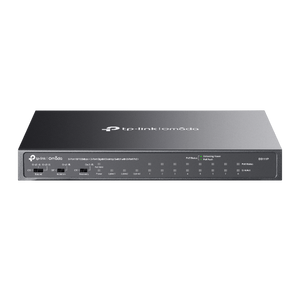
What is a PoE Switch?
A PoE network switch is a revolutionary networking device that delivers both data and electrical power over a single Ethernet cable. This eliminates the need for separate power adapters, which simplifies installation and reduces cable clutter for devices like IP cameras, VoIP phones, and wireless access points. Whether you're building a network for your home, office, or a large-scale deployment, a PoE enabled switch provides a clean, efficient, and cost-effective solution.
Choosing the Right PoE Switch
With various types and sizes available, selecting the perfect PoE switch (sometimes called Ethernet switch with PoE) can seem daunting. This guide will walk you through the key considerations to help you find the ideal model for your specific application.
Managed vs. Unmanaged PoE Switches
One of the first decisions is choosing between an unmanaged or managed switch.
- Unmanaged Switches: These are simple, plug-and-play devices. They automatically detect whether a connected device requires power and provide it perfect for basic home or small office networks where simplicity is key.
- Managed Switches: For networks requiring more control and security, a managed switch with PoE is the superior choice. It offers advanced features like VLANs (Virtual LANs) to segment network traffic, QoS (Quality of Service) to prioritize critical data, and advanced security protocols. Remote Device Rebooting is another major advantage; if a device like an IP camera freezes, you can remotely power cycle its port via the web interface, saving significant time and effort.
Find the Perfect Size: From 4 to 48 Ports
The size of the switch you need is determined by the number of devices you plan to connect.
- Small Networks (4-5 Ports): A compact 4 port switch or 5 port switch is ideal for small home setups or connecting a few devices.
- Home Office & Small Business (8-16 Ports): The versatile 8 port switch is one of the most popular choices. For networks with more cameras, a 16 port switch provides ample room for growth.
- Medium to Large Businesses (24-48 Ports): For larger deployments, a 24 port switch or a high-capacity 48 port switch offers maximum density and scalability for the most demanding environments.
Power Up: Understanding PoE Standards and Total PoE Budget
Perhaps the most critical factor in choosing an Ethernet PoE switch is ensuring it can provide adequate power to your devices. This involves understanding two key concepts: PoE Standards and the Total PoE Budget.
- Total PoE Budget: This is the total amount of power, measured in watts (W), that the switch can supply to all connected PoE devices at the same time. You must calculate the total power consumption of all your devices (e.g., 4 cameras at 10W each = 40W total) and choose a switch with a budget that exceeds that number to ensure stable operation.
- PoE Standards (Power Per Port): Different devices require different amounts of power, which is defined by the PoE standard they support. There are three main types:
- PoE (802.3af): Provides up to 15.4W per port, ideal for VoIP phones and basic IP cameras.
- PoE+ (802.3at): Provides up to 30W per port, ideal for PTZ cameras and Wi-Fi 6 access points.
- PoE++ (802.3bt): Provides up to 60W-90W per port, ideal for high-performance Wi-Fi 7 APs and digital displays.
When selecting your PoE ethernet switch, you must ensure its Total PoE Budget is high enough for all your devices combined, and that its ports support the necessary PoE Standard for each individual device.
Key Features to Consider
- Network Speed: While a gigabit PoE switch (1 Gbps) provides excellent performance for most needs, our new 2.5G and 10G multi-gigabit PoE models are built for maximum throughput. These blazing-fast speeds are crucial for eliminating bottlenecks and unlocking the full power of the latest Wi-Fi 7 access points.
- Specialized Applications: For installations exposed to the elements, a dedicated outdoor PoE switch with a rugged, weatherproof enclosure is essential for reliably powering outdoor cameras and access points.
- Switch with PoE passthrough: For some use cases, a switch with PoE passthrough would simplify the network deployment. For example, SG2005P-PD can be powered by a PoE++ switch and power the other devices like wireless access points, PoE cameras and VoIP phones. You don’t have to use a separate power adapter.
Explore our comprehensive collection of Omada switches to find the reliable, high-performance backbone your network deserves.